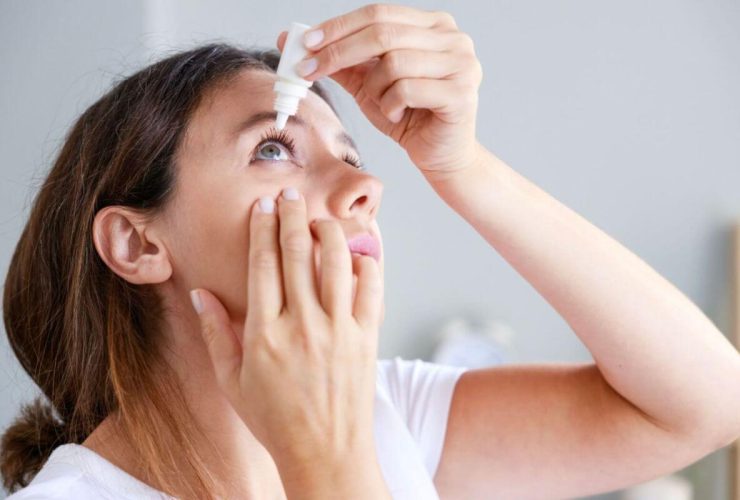


Why Do My Eyes Feel Gritty Even After Using Eye Drops?
If you’ve been reaching for eye drops daily but your eyes still feel gritty, sandy, or scratchy, you’re not alone, and you’re not doing anything wrong. Many people find that gritty eyes even after using eye drops persist because the drops are treating a symptom rather than the cause behind it. Depending on the type of dry eye you have, lubricating drops may only offer short-lived comfort.
This article explains the possible reasons your eyes still feel uncomfortable despite regular use of eye drops, why some drops work better than others depending on your specific symptoms, which signs suggest it’s time for a professional eye assessment, and what a dry eye consultation can reveal that drops alone cannot.
Why Do My Eyes Feel Gritty Even After Using Eye Drops?
Eyes often feel gritty even after using eye drops because the drops address dryness on the surface without correcting what’s causing the tear film to break down in the first place. Eye drops add moisture, but they don’t necessarily fix issues with tear quality, eyelid function, or gland health.
There are several layers to a healthy tear film: an oily outer layer, a watery middle layer, and a mucous inner layer. If any of these layers isn’t working properly, your eyes may still feel gritty even when they appear well lubricated on the surface. Standard lubricating drops top up the watery layer, but they can’t correct a poor-quality oil layer or an underlying eyelid problem. That’s often why the sandy or scratchy sensation returns within a short time.
Frequency and timing also matter. Using drops too infrequently, or only when symptoms flare up, may not give your eyes consistent enough support to feel comfortable throughout the day.
Can Dry Eyes Cause a Gritty or Sandy Feeling?
Yes, dry eyes are one of the most common reasons people experience a gritty or sandy sensation. When the eyes don’t produce enough tears, or when tears evaporate too quickly, the surface of the eye becomes less well protected and lubricated, which can feel uncomfortable or abrasive.
This gritty feeling happens because the cornea, the clear front surface of the eye, is extremely sensitive. Even small amounts of dryness or friction between the eyelid and eye surface can be noticeable. People often describe it as feeling like there’s sand, dust, or an eyelash in the eye, even when nothing is actually there.
It’s worth noting that a gritty sensation doesn’t automatically mean you have dry eye disease. Several other factors, discussed below, can produce very similar symptoms, which is one reason self-diagnosis based on symptoms alone isn’t reliable.
Why Might Eye Drops Only Provide Temporary Relief?
Eye drops often provide only temporary relief because they add moisture to the eye without correcting the underlying reason your tear film isn’t working properly. Once the drop’s lubricating effect wears off, usually within minutes to a couple of hours, the original problem is still there.
This is particularly relevant if your gritty eyes are linked to poor-quality tears rather than a simple lack of tear volume. For example, if the oily layer of your tear film is too thin, your tears may evaporate faster than usual, no matter how much extra lubrication you apply. In this situation, drops can feel like they help briefly, then wear off quickly, leaving you reapplying them throughout the day without lasting comfort.
The type of drop matters too. Some formulations are designed to add moisture, while others are designed to support the lipid (oily) layer or reduce inflammation. Using a drop that doesn’t match your specific type of dryness may explain why eye drops are not helping your dry eyes as much as expected.
It’s also important not to stop or change any prescribed eye drops without speaking to your optometrist or GP first, even if they don’t seem to be fully resolving your symptoms.
What Can Cause Persistent Gritty or Irritated Eyes?
A gritty or irritated feeling in the eyes can come from several different causes, and often more than one factor is involved at once. Common contributing factors include:
- Tear-film instability, where tears don’t spread evenly or evaporate too quickly
- Environmental factors, such as air conditioning, central heating, wind, or dry climates
- Prolonged screen use, which is linked to reduced blink rate and increased tear evaporation
- Contact lens wear, which can affect tear distribution and increase surface friction
- Eyelid or meibomian gland issues, where the glands responsible for the oily part of tears aren’t functioning as they should
- Allergies or general eye irritation, from pollen, dust, or other airborne irritants
- Certain medications or health factors, which can sometimes reduce tear production as a side effect
Because so many different factors can produce a similar sandy or scratchy feeling, working out which one (or which combination) applies to you usually requires a proper look at the eye surface, eyelids, and tear film rather than guesswork at home.
Could Your Eye Drops Be Unsuitable for Your Symptoms?
Yes, it’s possible that the eye drops you’re using aren’t well matched to the type of dryness you have, which can explain why they aren’t providing lasting relief. Not all lubricating drops work the same way or target the same part of the tear film.
For instance, someone with an unstable oily layer may benefit more from a lipid-based drop, while someone with reduced tear volume may respond better to a different formulation. If you’ve been using the same over-the-counter drop for weeks without much improvement, it may simply not be suited to your particular symptoms.
Preservatives in some eye drops can also be a consideration, particularly with very frequent use. This doesn’t mean preservative-containing drops are unsafe for occasional use, but if you find yourself using drops many times a day over a long period, it’s worth discussing suitable alternatives with an optometrist rather than simply increasing how often you use them.
When Should Gritty Eyes Be Checked by an Optometrist?
You should consider having gritty eyes checked by an optometrist if the sensation persists for more than a few weeks, keeps returning despite using eye drops, or is accompanied by other symptoms such as redness, sensitivity to light, or blurred vision. Persistent symptoms are a signal that something beyond simple, short-term dryness may be involved.
It’s also sensible to seek a same-day or urgent assessment if you notice any of the following:
- Sudden or worsening eye pain
- A sudden change in vision
- Pronounced or spreading redness
- Increased sensitivity to light
- Unusual discharge from the eye
- A recent eye injury or something that may have entered the eye
- Symptoms affecting only one eye suddenly and significantly
These signs don’t necessarily mean something serious is happening, but they do warrant prompt professional attention rather than waiting to see if drops eventually help. An optometrist can examine the eye surface, eyelids, and tear film in detail, something that isn’t possible to assess accurately at home.
How Can a Dry Eye Consultation Identify the Underlying Problem?
A Dry Eye Consultation can identify the underlying cause of persistent gritty eyes by examining the different components of your tear film and eyelid health in detail, rather than relying on symptoms alone. This gives a much clearer picture of what’s actually happening on the surface of your eye.
At Robin Hall Opticians in Worsley, Manchester, the Dry Eye Consultation uses digital mapping technology to assess factors such as the thickness and quality of the tear film’s oily layer, the height and stability of the tear meniscus, how quickly your tears break down after a blink, and the condition of the meibomian glands along your eyelids. This kind of detailed imaging can also help identify signs of eyelid conditions such as blepharitis, and can capture redness patterns across the surface of the eye.
Rather than guessing which type of eye drop might help, this assessment allows an optometrist to see specifically which part of your tear film isn’t functioning as it should, so any advice or treatment can be more accurately tailored to your particular symptoms.
What Dry Eye Treatment Options May Help Persistent Symptoms?
The most appropriate dry eye treatment depends on what’s actually causing your symptoms, which is why a proper assessment usually comes before any treatment recommendation. Once the underlying issue has been identified, an optometrist can talk you through options suited to your specific findings.
Depending on what the assessment shows, this might include guidance on the most suitable type of lubricating drop for your tear film, advice on eyelid hygiene where gland-related issues are found, lifestyle adjustments such as taking regular screen breaks or improving your environment, or a discussion of in-practice options where appropriate. Any recommended dry eye treatment should be personalised to your results rather than being a generic, one-size-fits-all suggestion, since dry eye can have several different underlying mechanisms.
It’s also worth noting that dry eye management is often about ongoing comfort and control of symptoms rather than a single, permanent fix, and your optometrist can help set realistic expectations based on your individual case.
What Should You Do If Your Gritty Eyes Are Not Improving?
If your gritty eyes are not improving despite using eye drops regularly, the most useful next step is a professional eye assessment rather than switching between different over-the-counter products by trial and error. Continuing to experiment with drops without understanding the cause can delay finding an approach that actually helps.
In the meantime, simple habits can support your eye comfort, such as taking regular breaks from screens, staying well hydrated, being mindful of air conditioning or heating directed at your face, and following any advice already given by a healthcare professional regarding existing treatment. However, if symptoms persist for more than a few weeks, keep returning, or are joined by any of the red-flag symptoms mentioned earlier, it’s sensible to arrange an assessment rather than wait it out.
Persistent gritty eyes even after using eye drops are a common reason people seek an eye examination, and getting a clearer picture of the underlying cause is often the most direct route to more lasting comfort.
Frequently Asked Questions
Why do my eyes feel gritty even after using eye drops?
This usually happens because eye drops add moisture without necessarily correcting the underlying reason your tear film isn’t stable, such as an eyelid gland issue or poor tear quality. The gritty feeling can return once the drop’s short-term lubricating effect wears off.
Can dry eyes cause a gritty feeling?
Yes, dry eyes are a common cause of a gritty or sandy sensation, as reduced or poor-quality tears leave the eye surface less protected and more sensitive to friction from blinking. However, other factors can cause similar symptoms, so it isn’t the only possible explanation.
Why are my eye drops not helping my dry eyes?
Eye drops may not help fully if they aren’t matched to your specific type of dryness, if they’re used too infrequently, or if an underlying issue such as an eyelid gland problem isn’t being addressed. A professional assessment can clarify which factors are involved.
Is a gritty feeling in the eyes a sign of dry eye?
It can be, but a gritty feeling alone doesn’t confirm dry eye disease, since environmental factors, screen use, contact lenses, and eyelid conditions can all cause similar sensations. An eye examination is the most reliable way to understand what’s contributing to your symptoms.
When should I see an optometrist for gritty eyes?
You should consider an assessment if symptoms last more than a few weeks, keep returning despite using drops, or are accompanied by redness, light sensitivity, discharge, or vision changes. Sudden or worsening symptoms should be checked promptly rather than left untreated.
Can a Dry Eye Consultation help find the cause?
Yes, a Dry Eye Consultation using digital mapping can examine the tear film layers, eyelid glands, and eye surface in detail, giving a clearer picture of what’s causing your symptoms than home observation alone. This allows any advice or treatment to be more accurately targeted.
What dry eye treatment options are available?
Suitable dry eye treatment depends on what an assessment reveals, and may include a more appropriate type of lubricating drop, eyelid hygiene advice, lifestyle adjustments, or other options discussed with your optometrist. Treatment is generally tailored to the specific cause found during assessment.
Ready to Get to the Bottom of Your Gritty Eyes?
If your eyes still feel gritty, sandy, or uncomfortable despite regular use of eye drops, it may be worth looking beyond the drops themselves and understanding what’s actually happening with your tear film and eyelids. Robin Hall Opticians in Worsley, Manchester offers a Dry Eye Consultation with digital mapping, designed to assess the underlying causes of persistent eye discomfort rather than just the surface symptoms. Getting a clearer picture of what’s going on is often the most useful step towards finding an approach that suits your eyes.
The information provided is for general informational purposes only and does not constitute advice. While we strive to ensure the information is accurate and up-to-date, we make no representations or warranties of any kind, express or implied, regarding the accuracy, adequacy, validity, or completeness of any information on this site.